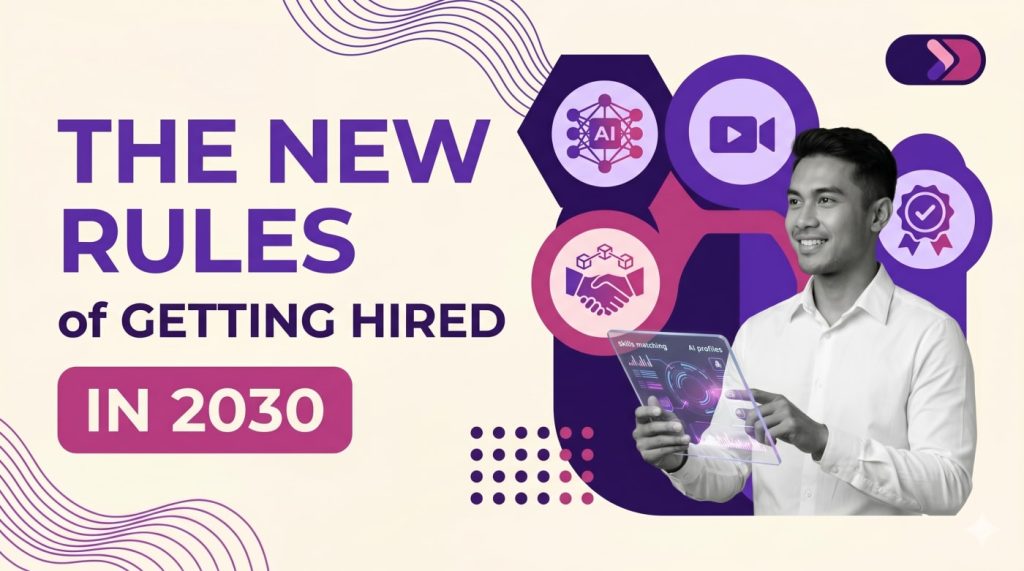
The New Rules of Getting Hired in 2030: Why What You’ve Done Matters More Than Where You Studied
For a long time, the path into a career felt pretty straightforward. Study hard, get decent grades, finish your degree, and land a job. That was the deal most of us grew up believing in, and for a generation or two, it worked reasonably well. Parents repeated it. Teachers reinforced it. The whole system was built around it.
That deal is changing. And if you are still operating under the old rules, it is worth understanding exactly what is shifting and why, because the gap between what worked before and what works now is getting wider every single year.
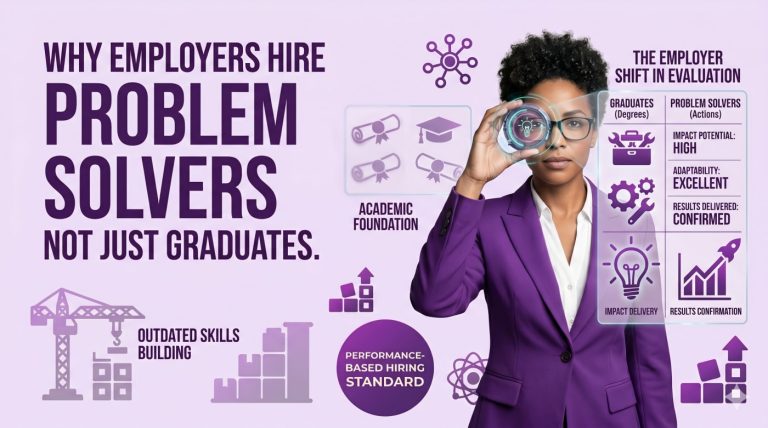
Employers are not struggling to find graduates anymore. There are plenty of those. What they are genuinely struggling to find is someone who can actually hit the ground running from day one. Universities teach important things, but they simply cannot keep up with how fast industries move. The result is a growing and increasingly visible gap between what a degree says about you and what a workplace actually needs from you. By 2030, that gap is going to matter enormously.
The Honest Problem With Degrees Alone
A degree still means something. It shows you can commit to learning over a sustained period, think critically about complex ideas, and see something through even when it gets difficult and tedious and you would rather be doing anything else. These are not small things. Universities develop your ability to absorb information, form arguments, and approach problems with intellectual rigour.
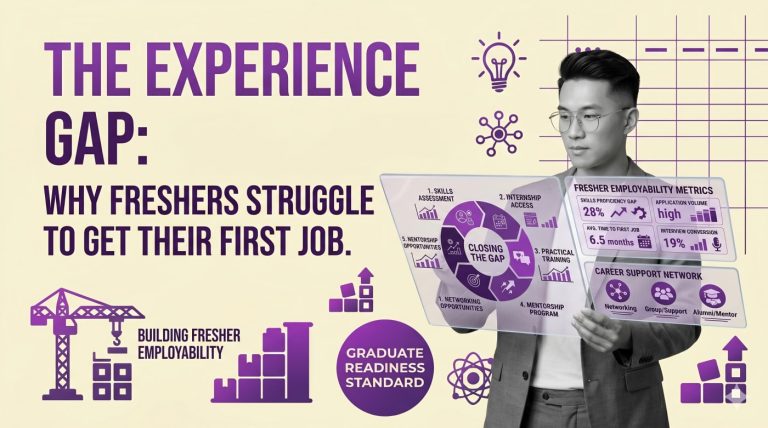
But here is the uncomfortable truth that nobody really talks about at graduation ceremonies: a lot of graduates walk into their first job having never worked on a real project, never dealt with an actual client, and never felt the genuine pressure of a deadline that actually matters to someone else. They have studied problems in theory but have not yet had to solve one with real consequences attached to the outcome.
Meanwhile, someone with an internship on their record, a portfolio of work they can point to, or even a side project they built on weekends can often demonstrate far more about what they are actually capable of. That person has proof. They have something concrete to show. And employers are increasingly noticing the difference between someone who can talk about a skill and someone who has actually used it under pressure.
This is not an argument against education. It is an argument for pairing education with something real.
What Interviewers Are Starting to Ask Instead
The question used to be simple: what did you study? The assumption behind it was that your course title and your grade said enough about you to make an informed hiring decision. Pick the person with the best degree from the best university and you would probably be alright.
That assumption is quietly eroding.
The questions becoming more common in interviews today sound very different. Interviewers want to know what you have actually built, not just what you learned. They ask what problem you helped solve, not just which modules you passed. They want to hear about what happened when things went wrong and what you actually did about it, not what you would theoretically do in a hypothetical scenario. They ask who you worked with and how that collaboration went when it got messy and human and complicated.
Anyone can say they understand data analytics, cloud computing, machine learning, or digital marketing strategy. Plenty of graduates can quote definitions and recite frameworks with confidence. But experience is how you prove you can actually do something useful with that knowledge when the pressure is on and the situation in front of you does not come with instructions.
Internships Are No Longer Optional
If there is one thing that is quietly becoming the single biggest hiring advantage in a competitive graduate market, it is meaningful internship experience.
Not because it looks impressive on a CV, though it certainly does. The deeper reason is that internships force you to learn things you genuinely cannot learn in a classroom, no matter how good that classroom is or how engaged you were in it.
You figure out how real organisations actually function, and you quickly discover that it rarely matches the clean diagrams in a textbook. Things are messier. Priorities shift. People disagree. The plan changes on a Tuesday afternoon and everyone has to adapt. You learn how to communicate with people across entirely different roles and departments, people who have different priorities and speak in different professional languages and are not always patient with someone who is still figuring things out.
You make mistakes in an environment where the stakes are real but survivable, and you learn from those mistakes in a way that genuinely sticks because the embarrassment and the lesson are attached to each other. You also get to use the actual tools and systems that companies rely on every single day. Not case studies about those tools. Not simulated exercises with fictional data. The real thing, with real consequences and real people counting on the output being correct.
That kind of exposure is very hard to fake. You either have it or you do not.
What Companies Will Actually Be Looking For
By 2030, the most sought-after candidates will not simply have qualifications sitting in a folder. They will have a track record. Even a short one. They will be able to walk into an interview and point to specific things they did, specific results they contributed to, and specific moments where they had to figure something out without a textbook answer waiting for them.
Employers across industries are already moving in this direction, and the trend is accelerating rather than slowing down.
Problem-solving ability will matter enormously. Not the ability to solve a neatly defined problem with a known solution, but the ability to look at a genuinely messy situation with incomplete information, competing pressures, and no obvious right answer, and still figure out a sensible path forward. This is not something you can rehearse in the abstract. It requires practice in real conditions, with real stakes.
Demonstrated project work will carry significant weight. Something you have actually built, analysed, designed, or shipped into the world. Something that exists beyond your own imagination and can be examined by someone else. This matters whether you are going into technology, marketing, finance, design, operations, or almost any other field. Show your work, as they say.
Adaptability will be one of the most genuinely valued traits in the workforce going forward. The people who thrive will not be those who panic when the plan changes or the situation shifts in a direction nobody predicted. They will be the ones who adjust quickly, recalibrate without drama, and keep moving. This is a skill built through experience, not through reading about resilience in a personal development book.
Clear communication will be more important than ever, particularly the ability to explain complex or technical ideas to people who do not share your background and do not necessarily want to. As workplaces become more cross-functional and the tools people use become more specialised, the person who can bridge different ways of thinking and make things understandable becomes genuinely invaluable to every room they walk into.
Collaboration under real pressure will separate strong candidates from average ones. Almost every workplace involves navigating relationships, quiet disagreements, competing priorities, and the occasional personality that makes everything harder than it needs to be. Someone who can work well with others even when it is complicated is someone every team wants more of, and usually does not have enough of.
The Portfolio Is Replacing the Transcript
This shift is already well underway in certain industries, and it is going to spread much further over the next few years. The transcript is becoming a formality. The portfolio is becoming the conversation.
GitHub profiles are increasingly reviewed before interviews in technical roles. Project case studies have become standard practice for those entering design, marketing, and product management. Certifications with genuine hands-on components, where you actually have to build something to earn the credential rather than just pass a multiple choice test, carry far more weight than traditional qualifications in fast-moving fields.
Freelance work, even when modest in scale, demonstrates initiative, real client management, and the ability to deliver something to someone who has expectations and a deadline. Hackathon submissions show that you can work quickly under pressure with people you have just met. Open-source contributions, community projects, and independent research all tell a story about what someone genuinely cares about and what they can actually produce when nobody is marking them.
A grade sheet tells you someone sat in a room and answered questions about a topic on a particular day. A portfolio tells you what they built with what they learned over time. The first is a record of being tested. The second is a record of doing something. One of those is more useful to a hiring manager trying to decide whether to trust you with their team and their problems.
Education Still Matters, But It Is Not the Whole Picture
None of this means studying is a waste of time, and it would be dishonest to suggest it. Academic learning gives you the foundations that practical experience needs in order to be meaningful. The concepts, the frameworks, the vocabulary, the ability to think carefully and critically through complex problems: all of this comes from structured education and it genuinely matters. Without it, experience can be shallow. With it, experience becomes transformative.
But there is a useful analogy that captures something true about the relationship between knowing something and being able to do it.
You can read every book ever written about swimming. You can understand the physics of buoyancy and drag, memorise stroke techniques, study breathing patterns, and watch hundreds of hours of competitive footage until you can describe a perfect freestyle turn in precise technical detail. Your theoretical understanding of swimming could be genuinely impressive at a dinner party.
And when you finally get into the water, you will still struggle. You will still swallow water at inopportune moments. You will still be working things out in real time in ways that no amount of careful preparation could fully replicate, because the water does not behave the way it does in your imagination.
You have to actually swim.
Careers work the same way. Knowledge is the starting point, and it is an important one. But experience is where knowledge becomes real, gets tested, gets refined, gets challenged, and finally becomes genuinely useful. The people who combine both are the ones who develop quickly and stand apart from the crowd.
What Is Driving the Change
It is worth understanding why this shift is happening, because it is not random. A few powerful and interconnected forces are pushing employers to prioritise demonstrated experience over academic credentials alone.
Artificial intelligence is handling more and more routine and process-driven tasks, and this will only continue at pace. What that does is raise the value of the things AI cannot easily replicate: genuine creative thinking, sound judgment in truly ambiguous situations, navigating complex human dynamics with care and skill, and the kind of collaboration that produces something greater than what any individual could achieve alone. These things are cultivated through real experience with real people in real situations. They do not emerge from coursework.
Technology is also changing faster than training programmes can possibly keep up with. This creates a practical and immediate problem for employers. They do not always have the luxury of bringing someone in and investing months in getting them comfortable with the tools and workflows the team depends on. They want people who already have a working familiarity with relevant systems and have shown they can pick up new ones quickly without needing their hand held through every step.
Digital transformation has also moved from being a future ambition written into strategy documents to a present reality in almost every industry. Cloud computing, data engineering, cybersecurity, artificial intelligence, automation: these are not emerging topics confined to a handful of tech companies in Silicon Valley anymore. They are what ordinary organisations everywhere are actively grappling with right now. The people who understand them practically rather than just theoretically are in short supply and consistently high demand.
A Different Way to Think About Your Education
The students who are going to thrive as we move towards 2030 are already starting to ask different questions than the ones previous generations were taught to ask.
Not simply what they should study, but what they can build. Not how to get the best grades, but what real experience they can gain alongside their studies without waiting until everything is theoretically perfect before they start. Not how to perform well in an exam, but how to contribute to something that exists and matters outside the classroom walls.
They are chasing internships with genuine curiosity and intent rather than treating them as a box to tick before graduation. They are taking on real projects through student societies, competitions, community organisations, or their own restless initiative. They are contributing to things that exist in the world, not just submitting work that gets marked and returned and filed away. They are doing the work before they are officially hired to do it, and in doing so, they are quietly building the track record that will matter more than they currently realise.
Every real-world experience you collect is a competitive advantage over someone who has a similar degree but never bothered to go out and get their hands dirty. The frustrating reality is that most people wait until they have graduated to start thinking seriously about practical experience. By then, others are already a few years ahead. You do not have to wait, and frankly, you cannot afford to.
The Skills That Will Define the Next Generation of Hires
Looking ahead to what hiring will actually look like as we get closer to 2030, a clearer picture is forming, even if the specific details are still shifting.
The people who will be most in demand are those who have developed a combination of technical literacy and deeply human skills. They understand how digital tools work without being rigidly defined by any single one. They can work across disciplines and bring different kinds of thinking together into something coherent and useful. They communicate clearly and listen carefully, which turns out to be rarer than it should be. They take initiative without waiting to be told exactly what to do. They are comfortable sitting with uncertainty and treat setbacks as information rather than evidence that they are not good enough.
These are not skills you develop by sitting in lectures and taking careful notes. They are skills you develop by doing things in the world, paying attention to what happens, reflecting honestly on your part in it, and then trying again with what you have learned.
The students who understand this early are not just better prepared for employment. They are building the kind of character and capability that makes them more valuable to every team and every organisation they will ever be part of throughout their career.
The Bottom Line
In 2030, having a degree will still open doors. The qualification has not lost all its power and it would be misleading to suggest it has. But what happens once you are in the room, once you are sitting across from someone trying to decide whether to hire you, will depend almost entirely on what you have actually done with your time and your education.
The strongest candidates will be the ones who combined their learning with real-world experience. The ones who did not just study problems but actually worked on them with real people and real consequences. Who did not wait to be handed opportunities but found ways to create them for themselves, even when it was inconvenient, even when the work was unpaid, even when the path was not clearly signposted.
Experience is not going to be a bonus on top of a good degree anymore. It is going to be the baseline expectation, the starting point rather than the differentiator. And the people who have it will not just get hired faster. They will perform better from day one, grow faster over time, and build careers that genuinely reflect what they are capable of rather than just what they studied.
The good news is simple: you can start building yours right now. Not after you graduate. Not next semester when things settle down. Right now. Every project you take on, every internship you pursue, every real problem you try to solve is a brick in the foundation of something that will matter far more than your final grade ever will.
Start building.